

numbers

Why it Matters - Death Penalty

Readings for today: Numbers 33-36

I worked for two years at New Jersey State Prison as a volunteer chaplain. NJSP is where the state of New Jersey sends the worst of the worst. Murderers. Violent criminals. Sex offenders. Gang leaders. Mafia dons. It is also where they used to house death row. I never was allowed into death row itself but I remember standing outside the door, looking in. It was a sterile environment and the men housed there were cut off from the general population. New Jersey abolished the death penalty in 2007, five years after I left. But from 1690 to 1963, they executed 361 people. 

The death penalty is a thorny subject for Christians. In theory, it does have biblical support drawn mainly from passages like we read today in Numbers 35. But a careful reading of the passage reveals many fascinating details. Cities of refuge. Premeditated murder vs. accidental death. Avengers of blood. Congregational trials. Evidence. Witnesses. Motives. Methods. It’s a very specific passage that actually places limits on vengeance in a way that would have been striking to other ancient near east cultures. It employs the principle of lex talionis  or “an eye for an eye and a tooth for a tooth.” Proportional justice. It keeps vendettas from forming between families and clans that last generations. 

Those who support the contemporary use of the death penalty on biblical grounds need to wrestle with the boundaries this passage sets. Provision must be made for the safety of the murderer while he/she awaits trial. Motive must be carefully discerned and the accuser must be the one to carry out the sentence. If there was no premeditation, then the congregation is allowed to judge and show mercy by assigning the person to a city of refuge for a certain duration. (Lifetime of the current high priest.) There must be more than one witness to the crime. And you cannot tolerate murder in the land lest it become ritually polluted. 

Obviously, it’s quite the challenge to apply ancient near east law codes in a 21st century context. Layer in the obvious problems we have in our legal system with ethnic and economic injustice (statistically ethnic minorities and the poor are far more likely to be convicted in our culture), as well as the frequency with which our justice system convicts the wrong person (DNA evidence has been a game-changer here), and one can see why many would argue we should abolish the death penalty altogether. Furthermore, what are we do to with Jesus’ words in the Sermon on the Mount? “You have heard that it was said to those of old, 'You shall not murder; and whoever murders will be liable to judgment.' But I say to you that everyone who is angry with his brother will be liable to judgment; whoever insults his brother will be liable to the council; and whoever says, 'You fool!' will be liable to the hell of fire.” (Matt. ‭5:21-22‬) Clearly, Jesus is accusing all of us of being guilty of murder in our hearts.

So what do we do? We must carefully and prayerfully consider our position on the death penalty. We must ask if it is just...not as an abstract concept but as a concrete practice. We must make sure our practices are just and if there is even a hint of incompetence or injustice in the way we prosecute then we must forbear. Furthermore, we have to come to grips with the gravity of our actions. Executing another human being is deeply significant. The shedding of blood is not something to take lightly. Unjust killing pollutes the land in which we dwell. Finally, and most importantly, to take the life of another human being before they accept Christ as Lord and Savior consigns them to an eternity in hell. All these factors must weigh heavily on us as we wrestle with this issue in our society. 

Readings for tomorrow: Deuteronomy 1-3

Divine Judgment

Readings for today: Numbers 29-32

“Exact vengeance for the Israelites on the Midianites – after that you will be gathered to your people.” (Numbers‬ ‭31‬:‭2‬ ‭NET‬‬) Who was Midian and what had they done to Israel to cause God’s judgment to fall on them? Furthermore, why was God’s judgment so harsh and unyielding? Why did it involve women and children? It sounds a lot like an ancient form of jihad and is one of the main reasons many skeptics reject the Bible.

First, some historical context. Midian was a son of Abraham and his servant Keturah. While Abraham was still alive, he sent Midian away so that there would be no competition for Isaac’s inheritance. Midian presumably thrived over the years becoming a great tribal nation. Abraham’s great-grandson Joseph was sold to Midianite traders as they made their way to Egypt. Moses fled to Midian to escape Egyptian justice and actually married a Midianite woman. As Moses learned to lead the nation of Israel, he leaned on his father-in-law, a Midianite priest, for advice but Israel’s close association with Midian would come back to haunt them as they began to intermarry with them and co-mingle their worship practices. This results in judgment as God pours out His wrath on Israel through a plague which is only stopped when Phinehas kills Cozbi, daughter of a Midianite chief named Zur, and her husband Zimri, who was the son of a Simeonite chief. Additionally, the Midianites had allied themselves with the Moabites, setting themselves in opposition to Israel, and called on one of their prophets - Balaam - to come and curse the people of God. So clearly there was a history of enmity between these two tribal nations.

Second, we must remember God’s commandments regarding true worship. For example, the 2nd Commandment says, “You shall not make for yourself a carved image or any likeness of anything that is in heaven above or that is on the earth beneath or that is in the water below. You shall not bow down to them or serve them, for I, the Lord, your God, am a jealous God, responding to the transgression of fathers by dealing with children to the third and fourth generations of those who reject me…” (Exodus‬ ‭20‬:‭4‬-‭5‬ ‭NET‬‬) God is jealous for His divine name. Jealous for His divine glory. Jealous for His relationship with His people. He makes it clear over and over again throughout the Scriptures that He will tolerate no rivals. So when Israel begins to worship the Midianite gods, God takes action. He punishes Israel as I mentioned above. Then He calls for holy war. He commands His people to attack Midian and “execute the Lord’s vengeance.” Vengeance, not in the sense of God losing control and lashing out, but vengeance in the sense of the righteous execution of God’s justice. Israel is successful. They kill all the males that come against them. They take the women and children hostage. They plunder their possessions. Then they go one step further. As an act of ritual purity, they kill all the male children and any women who is not a virgin. It is brutal. It is horrifying. It is judgment. The women were just as guilty as the Israelite men in the sin of idolatry at Peor and their guilt conveys to their male children as well who - if left alive - might seek their own revenge against Israel in the future. (Blood feuds between tribes and clans were common in ancient times and could last generations.)

This is a terrifying concept, especially for the 21st century American reader. It doesn’t square with our understanding of a loving God who always shows mercy and grace to the sinner. When we read passages like this, we think of modern-day terrorists. Suicide bombers. Religious extremists like ISIS and we cannot understand how God could ever act in such a way. This is where we come face to face with God’s holiness. God’s righteousness. God’s justice. The stark reality is this...evil makes God righteously angry. Idolatry offends Him. He does not let it go. He does not overlook our sin. He does not turn a blind eye to our rebellion. This is why the cross is itself so brutal and horrifying. On the cross, God pours out the full measure of His righteous wrath and judgment on His Son. He satisfies the demands of divine justice through Jesus’ suffering and death. On the cross, the truly innocent One dies in our place.

So what is our response? Repentance. Repentance is the only appropriate response of the creature when confronted by the Creator and this is the lesson we must all take away. God will not be mocked. Not back then. Not now. Not in the future. God is a God of love and mercy and grace but He is also a God of holiness and righteousness and justice. He is quick to forgive the sin of those who repent but He is also faithful to judge those who persist in their rebellion. Humble yourself before the Lord before it is too late. Embrace the Son and what He has done for you. Give your life to Christ that you might be saved from the coming judgment.

Readings for tomorrow: Numbers 33-36

Leadership

Readings for today: Numbers 25-28

I am heading back home today after spending time with our denominational leadership. One of the many tasks set before us was to drill down on “ordination standards.” In other words, what qualifications must a person have to be eligible to serve as a pastor in one of our churches. We spent three years trying to answer this question. We interviewed and solicited feedback from a wide variety of stakeholders across the country. We sought expertise from our seminary leaders. We looked models being used effectively in other denominations. We discussed academics, professional experience, and character formation. And we landed on some recommendations that we will put before our denomination at our annual meeting this summer. It was a fascinating process. The people I served alongside are thoughtful and reflective and I believe our end product will be a blessing should it be passed.

But then I read about the leadership transition from Moses to Joshua today and I wonder if we haven’t overcomplicated the process? I wonder if we prioritize the wrong things? Moses asks God for a person who would “go out before Israel.” In other words, someone who would lead them into battle. Someone with courage. Someone who is unafraid to put themselves in harm’s way. Second, he asks God for a person who would “come in before Israel.” Someone who would govern them in their day to day life. Point them to God. Teach and train them in righteousness. Finally, he asks God for a shepherd. Someone who would care deeply for the sheep. Someone who would love the sheep enough to lay down their life for them. And how does God respond? He identifies a man in whom “there is such a spirit.” His name is Joshua. A man with a track record of courage and faithfulness. A man who has already demonstrated the gifts Moses is looking for in the person who would succeed him. A man who has already served God’s people in so many ways.

Obviously, there is a vast difference between leading a nation and leading a local church. There is also a great cultural difference between leaders in the ancient near east and leaders in the modern Western world. At the same time, I wonder what would happen if we privileged life experience more than education? I wonder what would happen if we put more of an emphasis on what a person has already demonstrated by the way they have led and served rather than focus on potential? I wonder what would happen if we focused more on the “spirit” of a person rather than an educational credential? Leadership is more caught than taught. It is a gift we receive from the Holy Spirit more than it is a set of principles we read in a book. Take some time to pray today that the Lord would make you the kind of leader you need to be in your home, your workplace, your church, and your community.

Readings for tomorrow: No devotionals on Sundays

Water

Readings for today: Numbers 21-24

Many years ago, I was sitting with indigenous denominational leaders in southern Ethiopia, talking about church planting. It was our first trip to the region and they shared with us how difficult it had been for them over the years. They faced all kinds of persecution. They had access to very few resources. In many ways, they felt forgotten. The image they used was of the wadi’s that Israel journeyed through on their way to the Promised Land. Dry riverbeds with little to no water. Certainly not enough to sustain a growing population. In the same way, they felt like their lack of access to any kinds of resources was hamstringing their ability to grow the Kingdom in their part of the country. When we signed our partnership agreement, they rejoiced. They literally started singing the opening lines of the song from Numbers 21:17-18, “Spring up, O well, sing to it! The well which the princes dug, which the leaders of the people opened with their scepters and their staffs.” And they talked about God fulfilling His promise to fill the dry riverbeds all around them and that’s exactly what happened. Hundreds of churches were planted. Thousands of people came to saving faith. It was an amazing movement of God.

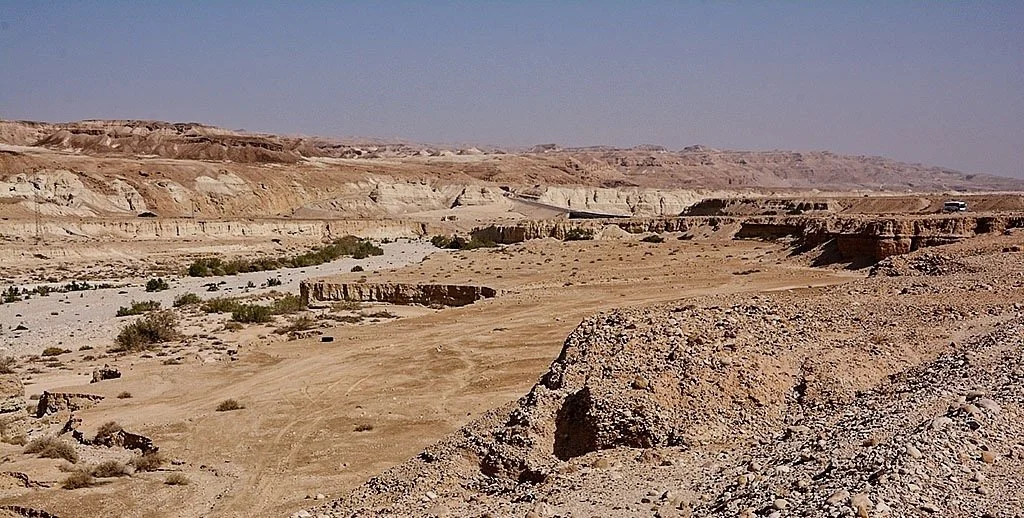
The people of Israel wandered in the wilderness for forty years. And though God provided for them all along the way, it wasn’t an easy journey. If you trace their route, you can easily see it goes through some incredibly challenging terrain. They were essentially traveling through the desert. There was little to no food or water. Furthermore, this was new territory for them. They didn’t know all the different oases or watering holes along the way. They didn’t know when and where to stop to conserve their strength. They were literally walking by faith and not by sight. Trusting God to lead them every step of the way. Take a look at the pictures I’ve included to get a sense of what they experienced. Is it any wonder they grumbled and complained? Is it any wonder they questioned why they ever left Egypt? Is it any wonder they struggled to maintain their faith in the face of all their hardship and suffering?

We too are on a wandering journey through this life and through this world. We often face challenging times and difficult seasons. Periods in our lives where basic provisions may be scarce. It causes us to wonder where is God in the midst of it all? Is He still with us? Is He still leading and guiding us? This is where we have to walk by faith as well. Trust Jesus to provide the Living Water that never runs dry. Living Water that spring up like a well deep within our souls. If we drink from this water, we will never thirst again.

Readings for tomorrow: Numbers 25-28

Fruitfulness

Readings for today: Numbers 17-20

I am in Orlando this week serving my denomination alongside some wonderful colleagues. These men and women are deeply faithful. They love Jesus. They make so many sacrifices. They give so much of themselves. I am blessed by our conversations and discussions. One of the big topics that always comes up is how we believe the church is doing. Are we heading in a healthy direction? Are we growing in gospel faithfulness? Are we making disciples who make disciples? Are we making an impact for the Kingdom of God in this world? These aren’t easy questions to answer. It’s hard to even quantify the metrics we would use to make our assessments. At the same time, when we look across our denomination, we do see churches that seem to be thriving. They are engaged in all kinds of wonderful, growing ministry. They are bearing all kinds of wonderful gospel fruit. The Spirit is blessing and empowering them for all kinds of sacrificial acts of service. It’s awesome and I love it.

I’ve often wondered why some ministries flourish and others fade. I’ve often wrestled why some pastors seem to be so effective while others struggle. I’ve often questioned why some churches grow and others decline. I’ve read a ton of books on the subject. I’ve listened to all kinds of podcasts. I’ve even engaged different well-known thought leaders on the subject. None of them have given me much of an answer. Then I read a passage like the one we read today. The people of God have barely survived a rebellion. They have no idea how close they came to destruction. All because they questioned the leadership of Moses and Aaron. So God commands each tribe to bring a staff, representing the leader of that tribe, and place it before the ark of the covenant. When they come back the next day, Aaron’s staff has “sprouted, and brought forth buds, and produced blossoms, and yielded almonds!” (Numbers 17:8 NET) What an incredible miracle! And one that had nothing to do with Aaron. Aaron’s staff didn’t bud because of Aaron’s hard work. Aaron’s staff didn’t produce blossoms because of Aaron’s great ideas. Aaron’s staff didn’t yield almonds because of Aaron’s spiritual maturity and faith. Heck, Aaron wasn’t even around when it all happened! No, this is all about the glory and providence and sovereignty of Almighty God.

Like Aaron and the rest of the leaders of the tribes of Israel, we bring what we have to offer to the Lord. We present our “staffs” and lay them before His altar. That’s all we are charged to do. That’s all we can do. It is God who gives the increase. God who grows His church. God who fills His people with His Spirit and empowers them to do mighty things in His name. The call of God is clear from Scripture. Seek Him first. Seek His Kingdom first. Seek His righteousness first. If we do these things, then all the rest will be added to us. Everything we care about will be taken care of. That’s God’s promise. Trust Him. Put your life in His hands and let Him make your life fruitful for His glory.

Readings for tomorrow: Numbers 21-24

Glory

Readings for today: Numbers 14-16, Psalms 95

Today’s passage reveals two things in stark terms. First, the greatest obstacle to the fulfillment of God’s mission is us. Humanity. Human beings made in the image of God who continually rebel against God. Second, the reason God’s mission will always succeed is because of His great faithfulness. His steadfast, loyal love. His grace that extends from generation to generation. Without God’s love, we would be doomed. Destroyed. Our sin is simply too much. Our tendency to rebel to hard to resist. Our pride too much to overcome.

The people of God quake in fear at the report of the spies. They mutiny against Moses and the Lord. They make plans to head back to Egypt. Back to slavery. Back to what was familiar. But for the intervention of the Lord, they would even have stoned Moses to death! Incredible! Korah rebels. Dathan and Abiram rebel. The people blame Moses and Aaron for their deaths. God sends plagues. He opens the earth. He allows them to be defeated in battle. He makes them wander in the wilderness until an entire generation passes away. It’s depressing how often God’s people turn their back on Him. But still He remains faithful. Faithful to love. Faithful to judge. Faithful to discipline. Faithful to comfort. Through the intercession of Moses and Aaron, God makes His steadfast love and faithfulness known. He reveals His nature and character and the people are once again reminded of God’s greatest desire which is the fill the earth with His glory.

Friends, come hell or high water, God will make His glory known. No obstacle will stand in His way. No power will prevent Him from accomplishing this great task. Not sin. Not evil. Not even death. “But truly, as I live, all the earth will be filled with the glory of the Lord.” (Numbers‬ ‭14‬:‭21‬ ‭NET‬‬) It’s an incredible statement! One that drives God even to this day. God’s plan is for God’s people who are made in God’s image to multiply and fill the earth! This is the “Great Commission” given to Adam, Noah, Abraham, Isaac, Jacob, and the people of Israel. And Jesus renews this Great Commission at the end of Matthew’s Gospel when He sends His disciples out into all the world to make other disciples.

So think about your own life? Where are you living in willful disobedience? Where are you living in stubborn rebellion? What sins are you clinging to, refusing to let go? Is it pride? Is it anger? Is it disappointment? Is it fear? Where are you personally getting in the way of God’s mission to fill the world with His glory? Repent and believe and let the Spirit of God fill you and use you to spread His glory.

Readings for tomorrow: Numbers 17-20

Pure in Heart

Readings for today: Numbers 10-13, Psalms 90

Jesus once said, “Blessed are the pure in heart, for they shall see God.” He might have been talking about Moses. Moses was a humble man. In fact, he was more humble than anyone living on earth at the time. His humility was demonstrated over and over again throughout the course of his life. His leadership was a model of humility as he collaborated with others. One never gets the sense that Moses had any ambitions of his own. He simply lived to serve God and His people.

In our reading today, Moses’ humility is put to the test by his own family. Those closest to him. Those he loved and trusted the most. They became bitter and resentful towards Moses. They aspired to the same position and authority as Moses held among the people. More than anything, they were jealous of the unique relationship Moses had with God. “Is it only through Moses that God speaks? Doesn’t He also speak through us?” The obvious answer is “no.” God clearly wasn’t speaking through Aaron and Miriam like He was through Moses and He even goes on to tell us why. Moses is no ordinary prophet. He is God’s special servant with whom God speaks face to face.

If we’re honest, this grates a bit. We probably sympathize more with Aaron and Miriam. Believing rightly that all are equal in the eyes of God, we often make the false assumption that all are called to the same roles in God’s Kingdom. I see and hear it all the time. Men and women who look to those in authority above them in an organization and believe they can do as good a job or better. Those who are just getting started in their professional careers who believe they can do just as good a job as those who have years of experience. Even among pastors this dynamic often comes into play as associate pastors become jealous of the influence or the position or the authority of a senior pastor. In fact, this is so common most churches have special rules in place to make it harder for associate pastors to ascend to the senior pastor role! So we are more like Aaron and Miriam than we want to admit.

To see God, we must be pure in heart. We must have the purest of intentions. We cannot allow selfish ambition or vain conceit to get in the way. We cannot let our aspirations or dreams to become more important than God’s dream for our lives. We must learn to humbly accept the role God has called us to play in His Kingdom. We should not look to others and play the comparison game. We should not allow envy or jealousy to get in the way. We should fix our eyes on Jesus who humbled Himself and became our servant. We should follow the example of Moses who humbled himself and became a servant. After all, the greatest in the Kingdom are the servants which is why they shall see God.

Readings for tomorrow: Numbers 14-16, Psalms 95

Succession Planning

Readings for today: Numbers 6-9

“How many years do you have left?” I got asked this question for the first time in my life on our recent elder retreat. It’s a good one. One all of us have to answer at some point in time in our lives. Some of us get to choose when we retire. Some have retirement forced upon them. Some work in industries where there is a mandatory retirement age. Others are forced into retirement when their bodies break down or age catches up to them or their memory begins to fade. Some make enough money or save enough to retire on their terms. But no matter who you are or how successful you’ve been, retirement is a reality we all have to face one day.

This was true for God’s people as well. Particularly, the Levites who served the Lord at the Tabernacle and later, the Temple. Their years of service were pre-determined. They started at twenty-five and ended at fifty. “This is what pertains to the Levites: At the age of twenty-five years and upward one may begin to join the company in the work of the tent of meeting, and at the age of fifty years they must retire from performing the work and may no longer work. They may assist their colleagues in the tent of meeting, to attend to needs, but they must do no work. This is the way you must establish the Levites regarding their duties.” (‭‭Numbers‬ ‭8‬:‭24‬-‭26‬ ‭NET‬‬) I don’t know why the Lord chose those particular ages as boundaries for service but I do know it established a rotational system among the Levites. The older generation routinely handing off their authority and duties to the younger generation. It made for a healthy succession plan that maintained consistency and competency when it came to the priestly duties they performed. And it guarded against a particular person holding on too long or refusing to relinquish control.

I can’t tell you the number of people I’ve seen over the years try to hold onto long. The politician who dies in office well into their nineties. The parent who never writes a will or does any estate planning. The pastor who refuses to entertain the idea of stepping down. On the flip side, I can’t tell you the number of people I’ve seen over the years use their “retirement” to check out on life. Though they have so much to offer, they spend their days largely entertaining themselves rather than continuing to make a difference for the Kingdom of God. I don’t think either approach is what God wants. God wants us to use our years to bless and serve others. And then even when we retire and hand off our responsibilities, He wants us to assist those who come after us, attend to their needs, mentor them, coach them, and share with them all we have learned. This is God’s plan for succession and it’s worth considering for every one of us.

Readings for tomorrow: Numbers 10-13, Psalms 90

Assignment

Readings for today: Numbers 3-5

As a young pastor just out of seminary, I struggled with my “call.” I am not sure what I expected. A voice from heaven? A burning bush? A pillar of fire? I had multiple opportunities to consider and didn’t quite know how to make a decision. So I asked an older, wiser pastor for his thoughts. He challenged me to stop overthinking things and instead simply focus on the “assignment” the Lord had given me. I was called to be a pastor. Nothing more. Nothing less. Nothing else. I was called to serve God’s people and that could happen in a variety of different contexts. Over the years, I’ve served in large churches and small churches. I’ve taught in seminaries and trained church planters overseas. I’ve been offered opportunities to serve my denomination in several different leadership roles. I’ve loved all of them but never in a million years could I have planned them out.

I thought about those words as I read about the assignments given to the different Levitical clans. The Levites were set apart by God to serve God. Unlike the other tribes, they were given no inheritance because their inheritance was the Lord. He had redeemed them as His own. “Then the Lord spoke to Moses: “Look, I myself have taken the Levites from among the Israelites instead of every firstborn who opens the womb among the Israelites. So the Levites belong to me, because all the firstborn are mine. When I destroyed all the firstborn in the land of Egypt, I set apart for myself all the firstborn in Israel, both man and beast. They belong to me. I am the Lord.” (Numbers‬ ‭3‬:‭11‬-‭13‬ ‭NET‬‬) Furthermore, the sons of Levi and their descendants were also set apart for specific tasks. The Kohathites were charged to carry the most holy objects from the Tabernacle. The Gershonites were to carry the curtains and the tent. The Merarites were to basically carry the rest of the equipment. Each of these sons and their descendants would shoulder this burden into perpetuity. This was their divine call. This was God’s assignment for them.

Everyone is born with a divine assignment. I know this may be hard to grasp or understand. After all, we live in a culture where we get to choose our profession. Choose, to some extent, our place in society. Choose where we will live and who we will live among. Most of humanity throughout history has not had the freedom to make such choices. And with such freedom comes an even greater temptation. We are tempted to believe we are the captains of our fate, the masters of our destiny. We are tempted to believe we are in control of our lives. We are tempted to believe we somehow are free from any “assignment” others might place on us. However, this is a lie. God has a plan for each of our lives. His divine plan includes our assignment in His Kingdom. It’s a space only we can occupy because each of us is fearfully and wonderfully made and, as such, have a unique contribution to make. What is your assignment? Have you asked God to show you His plan for your life in this particular season?

Readings for tomorrow: No devotionals on Sundays

Travelogue

Readings for today: Numbers 33-36

Many of us remember the famous words of Captain Kirk from the USS Enterprise as they traveled through uncharted space. “Space, the final frontier. These are the voyages of the starship Enterprise. Its 5-year mission: to explore strange new worlds, to seek out new life and new civilizations, to boldly go where no man has gone before.” I wonder if Moses had a similar internal monologue going as he led Israel through all kinds of uncharted, new territory on their journey to the Promised Land?

I freely admit I used to pass over the chapters we read today. The names and places listed in these verses simply didn’t mean much to me. The only interesting story is the fascinating one about the daughters of Zelophehad and their inheritance. Possibly one of the earliest examples from the ancient world where the Bible begins challenging cultural and patriarchal norms by expanding the rights of women. However, a few years ago, I was able to visit the Holy Land. My wife and I traveled for two weeks through modern-day Israel and Jordan. As we spent a week in Jordan, it dawned on me that we were traveling over the same territory as ancient Israel. I found myself standing in the ancient Biblical kingdoms of Edom, Ammon, and Moab. I was able to catch a glimpse of what the Israelites experienced and it changed everything for me. The verses we read today came alive in new and fresh ways because I actually had been to some of these places.

For example, Wadi Rum is a desert valley located in the southernmost part of Jordan. It was once part of the ancient kingdoms of Midian and Edom. It is a trackless wasteland with little to no water. Movies like The Martian are filmed there because of how it resembles the surface of the planet Mars. One can easily see how Israel, moving through this territory, would have become discouraged. Petra, the capital of ancient Edom, is located just to the north. The Nabateans used this valley as a trade route and it’s entirely possible the people of Israel used these same routes as they traveled north towards Jericho and the Promised Land.

Jabal Haroun is the traditional site revered by Christians as Mount Hor where Aaron died and was buried. You can reach his shrine today via an 11km trail from the center of Petra. You can also catch a glimpse of Jabal Haroun from the tallest mountains in Petra. I remember standing on top of a “high place” in Petra on a clear day and seeing the shrine across the valley. I tried to imagine Moses and Aaron in their very old age making their way up that mountain so Aaron could die according to the Lord’s command. It couldn’t have been easy.

We finished our week in Jordan on top of Mount Nebo. The very mountain Moses ascends to look out over the Promised Land before he died. Again, we had a clear day and one could see all the way to Jericho. The plains mentioned in the Bible stretched out before us. We saw the Dead Sea and the Jordan River valley. At night, I was told, one could even see the lights of Jerusalem in the Judean hills. It was here that the mantle of leadership passed from Moses to Joshua and it is considered a sacred place for the three Abrahamic religions of Judaism, Christianity, and Islam.

Like ancient Israel, all of us can list names and places that hold special significance in our spiritual journey. Sacred places where the Lord met us along the way. The journey Israel undertook wasn’t just physical. It wasn’t just about getting from one spot to another. It was formative culturally and spiritually. It’s what shaped them into a nation. They underwent a transformation from a rag-tag bunch of escaped slaves to a powerful nation united by a common law and common faith. This is what empowers them to enter the Promised Land and claim the inheritance God had given them.

Readings for tomorrow: Deuteronomy 1-3
Rorschach Test

Readings for today: Numbers 29-32

There is a famous test in psychology where the patient is shown a series of inkblots. They describe what they see while a psychologist analyzes their responses. It’s what’s known as a “projective test” because, in theory, the patient reveals different aspects of their mental state as they describe what they “see” in the inkblot. It was invented in 1921 by a Swiss psychiatrist named Hermann Rorschach and is one of the most widely used psychological tests to this day.

I thought about the Rorschach test as I read our passage for today. In Numbers 32, we read about a significant conflict between Moses and two of the tribes of Israel. The Reubenites and Gadites came forward with a request. They asked to settle on the wrong side of the Jordan River. They asked for an inheritance outside the Promised Land. This provoked a kind of trauma response in Moses. He assumed they were making the same mistake as their forefathers and mothers by refusing to go into the land. He forcefully reminds them of what happened and threatens them with destruction if they don’t follow through on God’s plan. The Reubenites and Gadites are quick to respond. They will go with the people of Israel into the Promised Land and will not rest until God’s plan is complete.

Isn’t it interesting that a seemingly innocent request spins everyone up so quickly? Even a godly leader like Moses? What is it about human beings that causes us to be so prone to snap judgments? Hot takes? Why do we struggle so much to wait and listen and truly understand? Why is it so hard for us to forgive, extend grace, and assume the best of one another? Over the last week, I’ve had several conversations involving politics, religion, social and cultural issues, and personal differences. As I’ve listened to those I love and serve attempt to process what they are feeling, it’s been amazing how different people can view the same situation or the same conversation through such different eyes. Every situation becomes a Rorschach test of sorts as we project our own fears and insecurities and frustrations on the other person or persons. It could be a political party. It could be a cultural or social group. It could be people of a different faith. It could just be someone with whom we are at odds.

Thankfully, the Reubenites and Gadites are quick to humble themselves. “Your servants will do just as my Lord commands.” (Numbers‬ ‭32‬:‭25‬ ‭CSB‬‬) They not only promise to go with Israel into the Promised Land but they will lead the way. They will make the greater sacrifice. They will honor their commitment to the Lord and to Moses. And because they honor God, Moses honors them. He grants their request and the conflict is resolved. Humility is the key to resolving differences. Seeking to understand rather than be understood. Seeking to love rather than be loved. Seeking to serve rather than be served. This is how we come together even when we disagree and find our unity in Christ.

Readings for tomorrow: Numbers 33-36

Allegiance

Readings for today: Numbers 25-28

Most of us really struggle to read and understand the Bible. We are too culturally removed from the actual events. We have a hard time deciphering ancient authorial intent. The way ancient people wrote their histories is foreign to us. Take what happened at Peor with the Moabites as an example. The reaction of God to false worship seems extreme, if not downright unjust and evil. Executing every single leader who participated in the pagan rituals? Phineas driving a spear through a man and his wife in their tent? Declaring war on the Midianites and striking them down? Over the years, I’ve heard several atheists claim this episode, like many others found in Scripture, as one of the primary reasons they can’t believe in God.

This is where we have to check our own cultural biases at the door. We have to be self-aware as readers and interpreters of the Bible of what we bring to the table. We are not blank slates. We come with all kinds of prejudices and assumptions baked in. For example, religion for us is a private affair. It’s highly individualistic. It’s something we believe we have a right to choose or not choose. In our minds, religion is often a philosophical idea. It’s a set of abstract beliefs or principles. It’s a theological system. Furthermore, there are no real consequences for “wrong beliefs” because there is no such thing as absolute truth. All religious belief is subjective and therefore dependent on the person. This is not what the writers of Scripture believed nor is it what the ancient peoples of the world believed. Worship was a declaration of allegiance. God or the gods were perceived to be kings in their own right. Endowed with ultimate authority over the world and every single person in it. Religious belief was not a matter of personal choice. It was a matter of life and death. Worship the “wrong” deity and the rains wouldn’t fall. Worship the “wrong” deity and your children died in childbirth. Worship the “wrong” deity and your tribe would be wiped out by their enemies. Why? Because God was real. He was not just an idea. Not just an abstraction. Not just a principle. He was as real as you or me and He held real authority over the world. So to defy God was to commit treason and the punishment for treason, as always, is death. And that’s why conflict in the ancient world always had a religious component to it. The ancient people didn’t separate “church from state” like we do. All of life was submitted to and under their deity’s control.

So where does that leave us today? What do we take away from these chapters? Is there anything we can learn that applies to our own time? Here’s where we look to Jesus. Jesus paid the ultimate “sinner’s” price in our place. He was condemned to death for sedition and treason against the Roman state and the principalities and powers of this world. Jesus laid down His life to save us from condemnation and judgment and by His grace, won the allegiance of our hearts. This is why we worship Him and ascribe to Him the name that is above every other name.

Readings for tomorrow: No readings on Sundays

Superstition

Readings for today: Numbers 21-24

When I first became a Christian, I started eating at a little pit BBQ place in Boulder. It was owned and operated by an amazing man named Bruce. Bruce was the son of the famous “Daddy Bruce” who served the homeless of Denver for so many years, making sure they got a full Thanksgiving dinner. Bruce Jr. was cut from the same cloth as his father. He not only served the homeless of Boulder well, he also was a strong believer in Jesus Christ. I don’t know that I’ve ever met someone quite like him. He literally could quote you chapter and verse from the whole Bible. He would quiz me every time I came in before he would make me any food. He would tell the best stories about how God had worked in his life. One day, he was sharing with me his frustrations with how biblically illiterate Christians tend to be. He was a black Baptist preacher and could preach with the best of them. I still remember the crescendo of his sermon that day...“Doug, when I’m in need, don’t you give me Footprints in the Sand! I don’t need no Prayer of Serenity! Tell me about the donkey that spoke! Now that’s in the Bible!” I still chuckle every time I think of it!

Today we read a story about a pagan fortune-teller named Balaam and his donkey. To set the scene, Israel is marching towards the Promised Land. God is fulfilling His promise to Abraham. But taking the Promised Land won’t be easy. The land is already occupied. There are forces arrayed against them along the way. Nations and tribes and cities whom they will have to fight in order to claim the promise as their own. Arad. Amorites. Bashan. All fall before Israel. All are put to the sword. Now it’s Moab’s turn. One can almost imagine living in Moab in those days, receiving word of a new superpower rising from slavery, defeating the Egyptians, overrunning all who oppose them. Fear and trembling seize the Moabites. And Balak, their king, sends for Balaam. His hope is that Balaam will use his magic to put a curse on Israel, weakening them so they can be defeated. Balaam refuses to come at first but eventually relents under the pressure and promises Balak sends his way. So he mounts his donkey and begins his journey. It’s not long before the donkey freezes in its tracks. It can see the angel of the Lord blocking their path. Balaam, in his blindness both physically and spiritually, is unaware. God opens the mouth of the donkey and speaks to Balaam. The net result of all this is that Balaam will indeed go to Balak but will only speak blessings over Israel. 

So what are we to make of these things? Magic? Fortune-telling? Donkeys that speak? The point is that God uses all things to accomplish His purposes, including our pagan superstitions. Remember when Jacob peeled poplar and almond trees in order to breed a specific kind of goat and sheep in Genesis? Does anyone actually believe the power was in the trees? What about the bronze serpent on the pole? Is it really the talisman that saved Israel from the poisonous snakes that were killing them? Think about the superstitions we live with today. The “invisible hand” of Adam Smith from his famous book, Wealth of Nations. The notion that democracy is transcultural and can be universally applied. The idea that we can choose to reject scientific realities like the laws of physics or biology. The truth of the matter is we too believe in magic. We too believe in myths. They may be couched in more sophisticated language or political, economic, and social theory but they are fairy tales nonetheless. 

So what’s a Christian to do? We have to push past our superstitions and look to God. We have to push past the “bronze serpents” we create and stop looking to “fortune-tellers” to show us the way. We have to dig deep into God’s Word. We must fix our eyes on Jesus.

Readings for tomorrow: Numbers 25-28

Signs

Readings for today: Numbers 17-20

One of the things I appreciate most about God is His willingness to give us signs. He doesn’t just ask us to take Him at His Word. He actually provides tangible, visible signs because He knows how easy it is for us to forget or lose heart. Abraham and Sarah received the sign of a child in their old age. Jacob was given all kinds of visions in the night. Joseph clearly interpreted the signs when his brothers showed up before him after he became a ruler in Egypt. Moses was given the sign of a burning bush, a parting in the Red Sea, the pillar of fire and cloud, and manna from heaven. These signs were also given to Israel to bolster their faith as they made their journey to the Promised Land.

Over the last few chapters, Moses deals with significant conflict. The people he leads rebel against him. His own brother and sister question his authority. He is accused of all kinds of things. How does he respond? Does he lash out in anger? Does he marshal his supporters and drive the others out? Does he start a campaign to defend himself? No. He remains humble and intercedes on their behalf before God. Most recently, Moses is forced to confront the rebellion of Korah. They sought to overthrow his leadership. And what does Moses do? He calls on God to give them a sign. Every leader of every tribe brings their staff, their symbol of authority, to Moses to lay before the Lord in the Tabernacle. The next day, Moses enters God’s presence to retrieve the staves. Clearly, one is now different than the others. Aaron’s staff has blossomed, producing almonds, while the other staves remain dormant. God has spoken. The sign has been delivered. The leadership of Aaron and Moses is confirmed.

I’ve been a pastor for over twenty years now and seen my share of conflict. Leading God’s people is not always easy. First and foremost, I recognize that I am chief among sinners. I am compromised myself in so many ways. And that makes it hard at times to know if I am leading from a place of humility or a place of pride. Second, the people of God are also sinners. Shocking I know! So when we gather as a church all we are doing is bringing a bunch of sinful, broken people into close proximity. Is it any wonder that sparks often fly? I’ve felt the sting of betrayal. I’ve had people try to destroy my career by making false accusations against me. I’ve been criticized more times than I can count, much of it probably warranted on some level. Thankfully, God has provided godly men and women in my life who have confirmed for me - over and over again - my call to lead. They have encouraged me and blessed me and spoken truth into my life and held me accountable. In short, God has used them as living “signs” to let me know His call on my life has not come to an end.

What about you? What signs has God given you in your life? As you look back over the course of your life, can you see where God provided the right people at the right time? Perhaps intervened in a particular circumstance? Answered a prayer? Performed a miracle? These are signs given to encourage you, dear friends, as you seek to follow Him.

Readings for tomorrow: Numbers 21-24

Rebellion

Readings for today: Numbers 14-16, Psalms 95

Rebellion seems hardwired into our nature. I remember when my children were young. One of the first words they learned was “no.” They wanted to be in charge. They wanted to be in control. They wanted to do what they wanted, when they wanted. Very few of us ever progress beyond that stage. Not if we’re honest. I can’t count the number of times my heart resists serving others. I can’t count the number of times I want to say “no” when someone asks me for something. Because I am human, I would much rather serve myself. I would much rather take care of myself. I would much rather focus on myself and my needs and my wants and my desires. Thankfully, the Lord continues to teach me. Thankfully, the Holy Spirit continues to sanctify me. Thankfully, God is changing me from the inside out and making me more like Jesus every single day. And slowly, my rebellious heart is becoming a servant’s heart.

I resonate with today’s reading on a lot of levels. I resonate with it personally because I know how rebellious my own heart can be. I resonate with it professionally because I know what it’s like to lead God’s people right to the edge of the Promised Land only to have them turn back in fear. I remember a season in a church I once served where we were right on the cusp of great things. God had been faithful. By His grace, the church had grown. The church was pressing out into our community to serve. The church had become a fuller, richer picture of the Kingdom as it grew more diverse generationally, economically, and ethnically. Sadly, like Israel, we hesitated. We pulled back. We refused to step into the future God was giving us. Several people left. The leadership got discouraged. And the opportunity was lost.

I’ve been a pastor for over twenty years now. I’ve served in ministry for almost thirty years total. I’ve seen this dynamic time and time again. It’s hard to walk by faith. It’s hard to trust God when there are “giants in the land.” It’s hard to press to the edge of our resources time and time again, hoping and praying the Lord comes through. But God’s command is clear. We must place our lives in His hands. We must place our future in His hands. We must step out in faith. We must risk it all for the sake of His Kingdom. We must be willing to sacrifice everything to further the gospel in our world. Thankfully, God’s promise is equally clear. If we take care of the things He cares about, He will take care of the things we care about. If we put Him first, all our priorities will fall into their proper place. If we seek His Kingdom and His righteousness, everything we need will be added to us. We don’t have to worry. We don’t have to be anxious or afraid. We have nothing to fear. We can let go of our resistance, cease our rebellion, and embrace what He wants to do in and through us for the sake of the world.

Readings for tomorrow: Numbers 17-20

Complaint

Readings for today: Numbers 10-13, Psalms 90

Humanity is never satisfied. It’s part of our sinful nature. It’s condition we are born into. No matter how much wealth we accumulate, it’s never enough. No matter how much power and position and influence we have, it’s never enough. No matter how much personal and professional success we achieve, it’s never enough. As the Apostle Paul once wrote, “our god is our belly.” Given the right set of circumstances, we will overindulge every time. Food. Alcohol. Material possessions. The list is endless because our appetite is insatiable.

Think of all the miracles the people of Israel had witnessed. The plagues in Egypt. The parting of the Red Sea. Manna from heaven. Water from rocks. The presence of the Lord on Mt. Sinai. Still, it wasn’t enough. They grew tired of the hardship of the journey to the Promised Land and complained about needing rest. They grew tired of eating manna and complained about wanting meat. Aaron and Miriam grew tired of Moses’ leadership and complained about wanting more influence and power. And when God fulfills His promise to bring His people to the edge of the Promised Land, what do they do? They complain about the strength of the people already living in the land. It’s like God can’t win with these people. No matter what He does, it’s never enough.

If we’re not careful, the same could be said for us. How easy is it for us to focus on all we don’t have rather than on all we do have? How easy is it for us to be jealous of our neighbors or friends or colleagues? How easy is it for us to be envious of another‘s success? How easy is it for us to covet the attention and influence that others may have? And how easy is it for us to forget all God has done for us? All God has worked out on our behalf? All God has given us? How easy is it for us to become complacent and start to complain rather than appreciate His blessings?

One of the spiritual practices I engage in on a daily basis is to spend time thanking God for all He has done for me. At the end of every day, as I lie in bed at night before I drift off to sleep, I count the blessings. I lift praises to God. I thank Him for the small things and the big things. For the ordinary and the extraordinary. I try to cultivate a mindset of abundance rather than scarcity by focusing on all I do have rather than what I don’t have. I try to foster an attitude of gratitude and thanksgiving rather than envy or jealousy or coveting what others have that I do not. It has been a transformative practice in my life and one I would encourage everyone to engage.

Readings for tomorrow: Numbers 14-16, Psalms 95

Blessing

Readings for today: Numbers 6-9

One of the most significant milestones in my spiritual journey was when I realized God’s greatest desire was to bless me. For years, I had labored under the assumption that I was primarily a “sinner saved by grace” rather than a “child beloved of God.” While both are definitely true, it matters which one comes first. If I see my primary identity as a child beloved by my Father in heaven, then I will have confidence in His will to bless me. On the other hand, if I see my primary identity as a sinner saved only by grace, then I may live with an underlying fear of judgment. Fear is a terrible motivation. While important on some level, it’s designed only for the short-term. Fear activates our adrenal glands. Our muscles swell. Our heart rate picks up. We prepare to either “fight” or “flee” based on the danger of a particular situation. It’s not intended to work over time. It’s not sustainable over the long-term. And that’s why love is a far better motivation for saving faith.

For years, I wrestled with a deep fear of God’s judgment. Then I started meditating on these words from Number 6:24-26. “May the Lord bless you and protect you; may the Lord make his face shine on you and be gracious to you; may the Lord look with favor on you and give you peace.” It’s known as the Aaronic Blessing. It is the most ancient blessing or benediction in the Bible. It comes directly from God and, as such, communicates His heart for His people. God loves His people. His desire is to bless them not curse them. He looks with favor upon them not judgment. His face shines upon them, conveying the pleasure of God as He interacts with those He loves. Most of all, God gives us peace. Not as the world gives. Not just a ceasefire or a temporary cessation of hostilities. But a true and lasting peace that transcends all understanding.

Do you understand God’s heart for you? Do you believe God’s primary will for your life is blessing? Do you believe God is at work protecting and providing for you? Do you believe God’s face shines when He thinks about you? Do you believe His face is shining on you even now? Have you accepted the gift of God’s grace? The gift of forgiveness and reconciliation with your Creator? Do you believe God looks with favor on you and those you love? Do you believe God wants to give you peace? Peace with Him? Peace with others? Peace with the world? Peace within your own heart? This is literally what the name of the Lord means. This is what God is trying to convey by giving them the blessing. Whenever His name is pronounced over His people, He wants them to know they will be blessed. And what was true for the ancient Israelites is still true for us today.

Take some time today and listen to “The Blessing.” You can find it on YouTube in several different versions. The one I like best was one produced while our world struggled to fight COVID. Different artists came together to sing this blessing over the world. Here’s the link - https://m.youtube.com/watch?v=d48-qbcovVY.

Readings for tomorrow: Numbers 10-13, Psalms 90

Weird

Readings for today: Numbers 3-5

The Bible is full of rituals that seem strange to us. This is part of the cultural distance we must keep in mind as we read. What may have been normative for an ancient near east Israelite is certainly not normative for a 21st century American and vice versa. Of all the strange rituals recorded in the Bible, the one detailed in Numbers 5 has to be among the strangest. A woman suspected of adultery is put to a test whereby she has to drink bitter water to determine if she is guilty of committing adultery.

First and foremost, we need to remember the context. Women and men were not considered equals in the ancient near east. In fact, women were more property than people so we shouldn’t be surprised at the patriarchal tone of the text. It doesn’t make it right. It doesn’t mean God is in favor of patriarchy. It simply means God is speaking to His people through the cultural norms of the day and revealing His sovereign will just as He does to this day.

Second, we need to remember the seriousness of adultery. Adultery was one of the “big three” crimes in ancient Israel. It was punishable by death along with idolatry and murder. The reason God lays out such harsh penalties is to protect the family. The family unit is the fundamental building block for God’s chosen people. It is through the family unit that faith is passed from one generation to the next and the story of God’s history with His people kept alive. God wants to protect the family at all costs and adultery puts the family at significant risk.

Third, God is a God of justice. Unlike the pagan cultures that surrounded Israel, God wanted to make sure that women were not cast aside on the jealous whims of their husbands. He wanted to protect women by providing a way for them to prove their innocence. He uses the cultic practices of the ancient world to place a hedge of protection around women to prevent them from being slanderously accused.

Finally, God is a God of honor. The honor of the wife and the honor of the husband and the honor of the family are of paramount importance to Him. Jealously threatens the honor of the family as does suspicion, gossip, and whisper campaigns that human beings seem to take so much delight in. By subjecting the woman to a public sacred ritual, all potential dishonor is put to rest. Furthermore, the public nature of the ritual would also act as a deterrent to husbands who might be tempted to bring frivolous charges against their wives.

So what do we take away from our reading today? Well, it’s worth pondering our own attitudes towards sexual fidelity in marriage. Do we guard our hearts and take adultery as seriously as God? Second, how can we protect the honor of our families in the way we think, speak, or act? How can we protect those we love from frivolous and slanderous accusations? Finally, we look to Christ who drank the bitter cup and took on the curse for us and we give thanks for His willingness to take our place.

Readings for tomorrow: No readings on Sundays

Vision for the Future

Readings for today: Numbers 35-36, Psalms 52

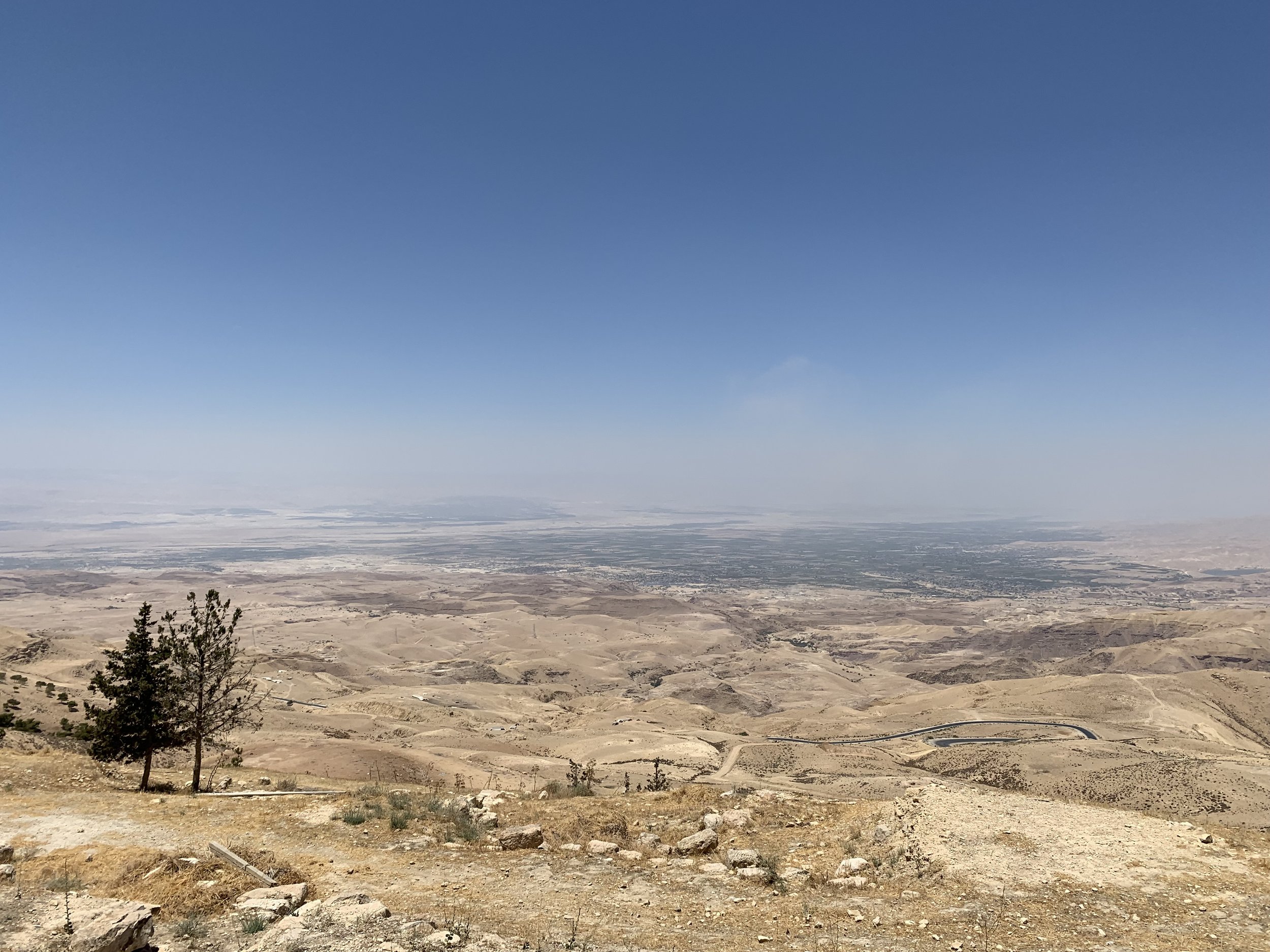
You are looking out on the plains of Moab. This is the view looking west from Mt. Nebo where Moses dies. On a clear day, you can see the Jordan River off in the distance as well as the city of Jericho. At night, you can see the lights of Jerusalem in the Judean hills. It’s a truly awe-inspiring sight. We were there during the summer months when it was hot and dry so it doesn’t look very appealing. Not only that but the Jordan River has been tapped for irrigation so no longer is as large which makes water in this region far more scarce than it would have been when the ancient Israelites first laid eyes on it.

As we close out the Book of Numbers and prepare to head into the Book of Deuteronomy, Moses casts a vision for the future of Israel. At this point in the narrative, we know Moses will not be entering the Promised Land. Israel will be going on without him. He’s led them faithfully and well for forty years in the wilderness and now he is preparing them for what lies ahead. He is organizing them in such a way that they will be successful in the land. As we read yesterday, Moses makes sure to recount their journey so they remember what brought them to this place. He reminds them of the boundaries God has set for them as they prepare to occupy this new territory. Today, he sets aside cities and pastures for the Levites who are not given a portion of land and he sets up cities of refuge as a way of protecting the Israelites from the blood feuds that plague so many other tribes in the ancient near east. Finally, he confirms the inheritance for Zelophehad’s daughters so the integrity of the tribal inheritance is maintained. These details may seem small or archaic but they will prove absolutely essential once Israel finds herself settled in the Promised Land.

These chapters also serve as a great reminder to us that God has a vision for our future and His vision includes taking care of everything down to final details. God has a plan for each of our lives and His will is not just general but specific. God promises to take all the experiences of our lives and the choices we make and use them to bring about His purposes. And what is true for us individually is also true for us corporately. God directs the courses of communities and cities and nations. As the famous Dutch statesman, Abraham Kuyper, once said so well, “There’s not a square inch in the whole domain of human existence over which Christ, who is Lord over all, does not exclaim, ‘Mine’!”

Readings for tomorrow: Deuteronomy 1-3, Psalms 53

Divine Rights

Readings for today: Numbers 33-34, Psalms 51

Americans as a general rule believe we are born with certain freedoms. Inalienable rights guaranteed to us by our Constitution. Among those are life, liberty, and the pursuit of happiness. The freedom of speech, assembly, press, and religion. In short, we believe no one has a right to tell us what to do or where to go or how to act. If we ever feel those rights are being threatened, we take action. We fight back. We sue. Nothing, it seems, will stop us from pursuing what we believe to be in our own self-interest. Can you imagine what would happen if God chose to do the same? After all, His rights were violated the moment Adam and Eve ate the forbidden fruit. His rights are violated every time a human being engages in sin and breaks His law. His rights are violated when we worship idols and images of our own making. Ascribing to created things the glory due our Creator.

One of the real challenges in reading Scripture is to keep in mind the rights of God. God has the right to literally wipe out the entire universe and start over. God has the right to execute every man, woman, and child on the earth for their sin. God has the right to judge the nations and destroy them for their greed and lust for power. God has the right to do all this and more. So what stays God’s hand? His endless mercy. His amazing grace. His unconditional love. His great faithfulness.

We are nearing the end of the Torah. The great story of the formation of God’s people. The birth of a nation. God has rescued them from slavery in Egypt. He has exposed the emptiness of the idols of the greatest empire on earth. God has utterly broken Pharaoh who set himself up as a god. God is demonstrating His power and authority over all He has made and He is about to do the same as Israel enters the Promised Land. God is faithful. He will not let this world go. He will have His way among us. He will have the glory He deserves. He will make Himself known to the pagan nations of the earth. This is why God commands Israel to “drive out all the inhabitants of the land before you, destroy all their stone images and cast images, and demolish all their high places. You are to take possession of the land and settle in it because I have given you the land to possess.” (Numbers‬ ‭33‬:‭52‬-‭53‬ ‭CSB‬‬) God has a right to our worship. God has a right to our total allegiance. God has a right to our faithful obedience. He wants nothing more than our whole hearts. Nothing less than our full devotion. Nothing else but our very souls.

Readings for tomorrow: Numbers 35-36, Psalms 52