Readings for today: Isaiah 5-8
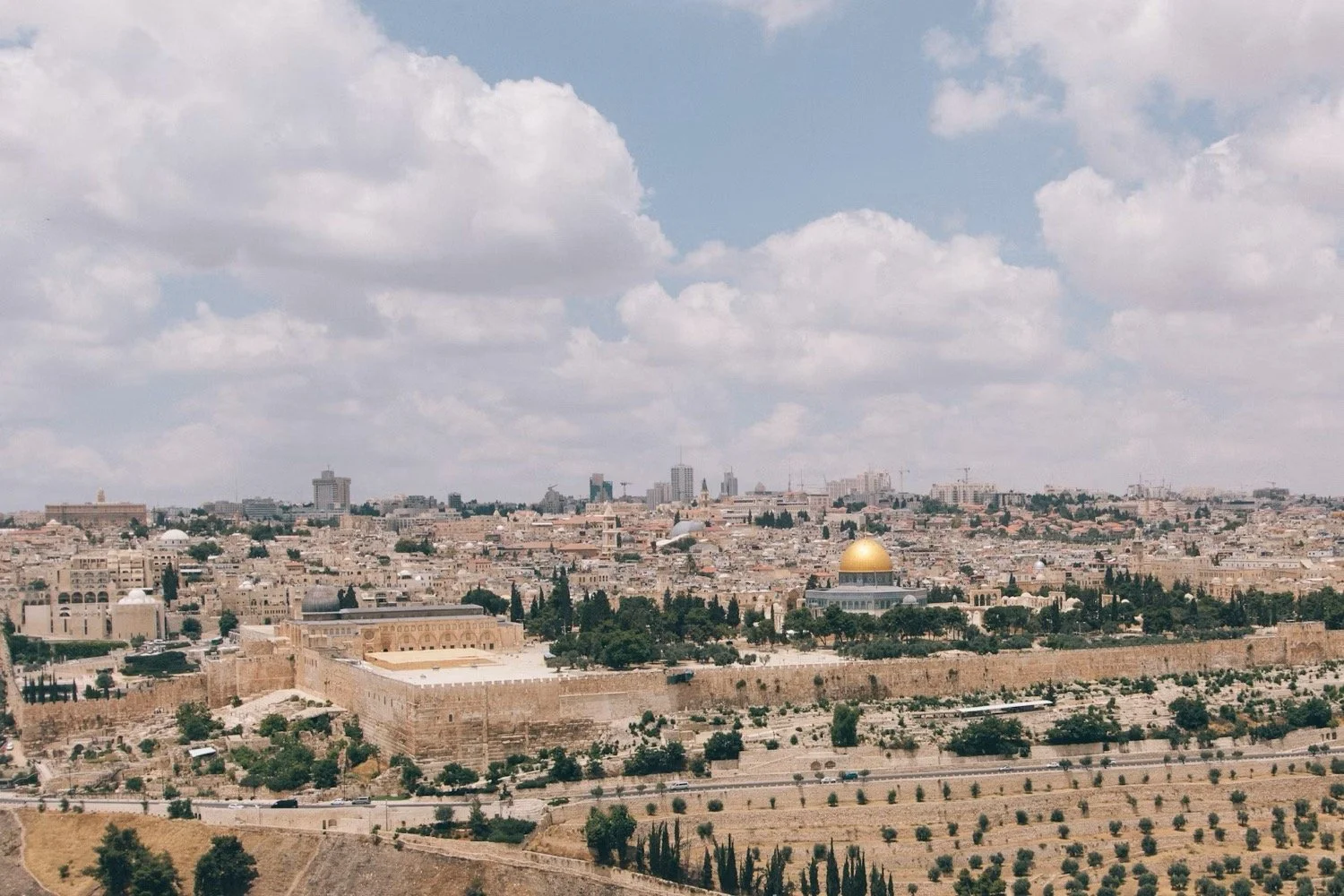
A few years ago, I was blessed to travel to Israel with my parents. We flew into Tel Aviv on a Sunday morning and as we descended through the clouds, I eagerly leaned over my sleeping wife to catch my first glimpse of the country. The nation of Israel goes by many names. The Promised Land to the ancient Israelites. The Holy Land to many Jews, Christians, and Muslims around the world today. Israel to her Jewish citizens. Palestine to the Arabs. The “vineyard of the Lord” to an ancient Israelite prophet named Isaiah. That last moniker is admittedly hard to see at first. It’s a dry and arid land. But Israel specializes in “desert agriculture.” Whereas the rest of the world fights against encroaching desertification and the degradation of fertile farmland, the people of Israel specialize in transforming the desert into fruitful, agricultural fields. They invest 4.3% of their GDP in agricultural research and development, provide 95% of their own food supply, and are a major exporter of fresh produce. It’s truly a miracle and a glimpse of the picture Isaiah once saw all those years ago.
“I will to my love - a song to my lover about his vineyard. My love had a vineyard on a fertile hill. He built a hedge around it, removed its stones, and planted a vine. He built a tower in the middle of it, and constructed a wine press. He waited for it to produce edible grapes, but it produced sour ones instead.” (Isaiah 5:1-2 NET)
Our guide was a man named Rami. He is Israeli by citizenship, having been born in Nazareth. He is Palestinian by nationality. He is Arab by ethnicity. He is Christian by religion. Listening to him share his stories was fascinating. He clearly loved his land and loved his people. As he spoke, you could hear the longing in his voice for a day when all the different tribes and faiths who lay claim to the land would humble themselves together before the Lord. And, at the same time, you could also hear his despair. As I listened to him, I thought about the call on Isaiah’s life and wonder if he ever felt the same way?
“The Lord said, “Go and tell these people: ‘Listen continually, but don’t understand! Look continually, but don’t perceive!’ Make the hearts of these people calloused; make their ears deaf and their eyes blind! Otherwise they might see with their eyes and hear with their ears, their hearts might understand and they might repent and be healed.” I replied, “How long, sovereign master?” He said, “Until cities are in ruins and unpopulated, and houses are uninhabited, and the land is ruined and devastated, and the Lord has sent the people off to a distant place, and the very heart of the land is completely abandoned. Even if only a tenth of the people remain in the land, it will again be destroyed, like one of the large sacred trees or an Asherah pole, when a sacred pillar on a high place is thrown down. That sacred pillar symbolizes the special chosen family.” (Isaiah 6:9-13 NET)
So where does Isaiah find hope? Where can a man like Rami find hope? Where can we find hope? We trust in God. We refuse to fall prey to falsehood and conspiracies. We refuse to trust those who would seek power and privilege at the expense of others. We refuse to assume human governments will do justice and love mercy. We refuse to give into fear though we undergo all kinds of violence and suffering and heartbreak and pain. Instead, we heed Isaiah’s call. “You must recognize the authority of the Lord who commands armies. He is the one you must respect; he is the one you must fear. And He will become your sanctuary…” (Isaiah 8:13-14 NET)
Readings for tomorrow: Isaiah 9-12