identity

What it Matters - Promised Land

Readings for today: Deuteronomy 1-3

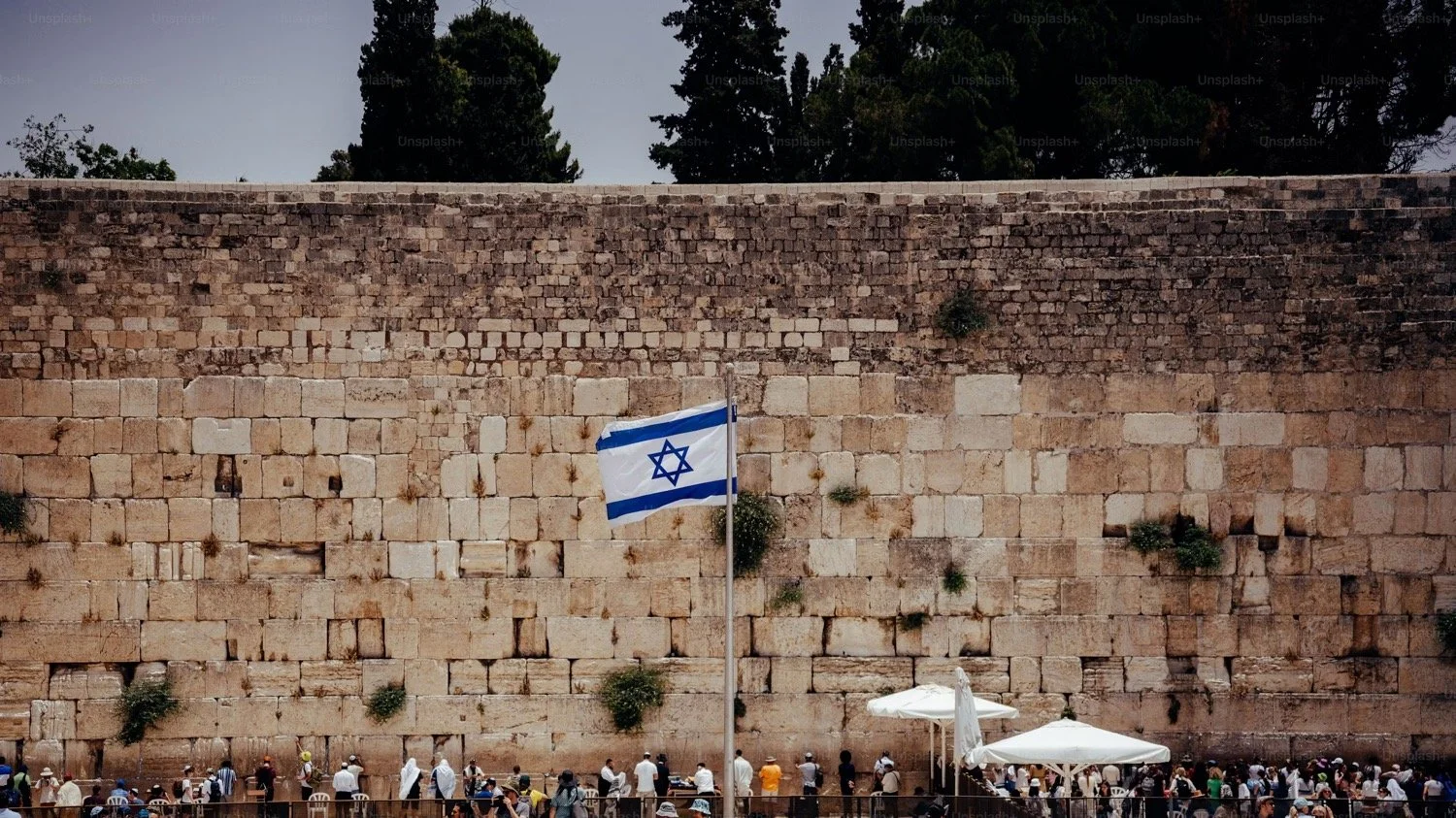
A few years ago, I had the privilege of visiting Israel. One of my favorite sites on the trip was Masada. If you don’t know the history of Masada, it is a two thousand year old fortress built by King Herod the Great. During the first Jewish-Roman War (66-73AD), Jewish zealots seized control of the fortress and courageously held off the full might of the Roman legions. Eventually, however, the legions were able to build a ramp up to the wall (which you can still see today) and break through the defenses of the fortress. Rather than be captured and sold into slavery, the remaining zealots committed mass suicide, thus becoming a powerful witness to future generations of Jewish courage and resilience in the face of overwhelming odds. The symbol remains so powerful that for decades, new recruits into the Israeli Defense Force would take their vows at Masada. (This has changed in recent years. Most now take their vows at the Western Wall though some special brigades still go to Masada.) Interestingly enough, when they take their vows, Jewish recruits are handed a rifle and a Tanach (Hebrew Bible containing the 24 books of the Old Testament), and promise to defend the State of Israel.

But what is the State of Israel? This is a highly volatile question. One that is the source of a lot of violence in the region. Certainly, many Arab and Palestinian groups refuse to acknowledge Israel’s right to exist. Many Muslims deny the existence of the historical Temple of Solomon as they too seek to de-legitimize Israel’s right to exist. The United Nations and many other international organizations may accept Israel’s right to exist for the sake of political expediency but certainly would never support Israel’s right to the territories mentioned in Deuteronomy, chapter three. In recent years, many left-wing political groups have joined the chorus against Israel’s right to exist. On the flip side, many right-wing political groups both within Israel and among international pro-Zionist groups do support the concept of a “Greater Israel” which is based on the boundaries set for the Promised Land in the Bible. It’s why settlement construction is taking place in Palestinian Territories and why some advocate for a complete takeover of Gaza or the rebuilding of the Third Temple on the Temple Mount.

Deuteronomy is Moses’ final sermon to God’s people as they camp on the plains below Mount Nebo across the Jordan River facing Jericho. They are poised to begin their conquest of the Promised Land. They will spend the next several years doing what all tribes and civilizations have done throughout history, carving out a place for themselves and their descendants. Their national identity will be forged in the fires of conflict and suffering and pain. They will face and fight against all kinds of overwhelming odds as the powerful empires around them battle for control of what is an important land bridge between Asia and Africa. Egyptians. Assyrians. Babylonians. Persians. Greeks. Seleucids. Romans. Muslims. Crusaders. Ottomans. British. All will take their turn ruling this particular strip of land. And though they would be exiled and displaced and persecuted wherever they went, the Jewish people never stopped believing and hoping for a day when they could return to the Promised Land. It’s why the modern nation-state of Israel isn’t just a political entity but a theological and religious one as well.

Readings for tomorrow: Deuteronomy 4-7

Identity

Readings for today: Exodus 19-21

Who am I? It’s a fundamental question. What makes me…me? What makes up my personhood? What grounds my identity? Is it my gender? My sexual orientation? My ethnicity? My nationality? Is it the family or clan or tribe I happen to come from? Is it my economic or social status? Does it have to do with my educational level? My profession? My level of influence in the world? Surely, all of these contribute to a sense of identity but none of them is strong enough to handle the full complexity of the human person. None of them is comprehensive enough to describe the full measure of what it means to be human. And if I try and ground my identity in any of these, my life will flatten out, becoming two dimensional, and I will lose out on so much of what God has for me.

I imagine Israel was asking this question. Now that they’ve been miraculously delivered from slavery, who are they? Who are they as a people? Who are they as a nation? They could have easily gone in a thousand different directions, trying to find the answers but thankfully, God had one already prepared. “You yourselves have seen what I did to Egypt and how I lifted you on eagles’ wings and brought you to myself. And now, if you will diligently listen to me and keep my covenant, then you will be my special possession out of all the nations, for all the earth is mine, and you will be to me a kingdom of priests and a holy nation.’ These are the words that you will speak to the Israelites.” (Exodus‬ ‭19‬:‭4‬-‭6‬ ‭NET‬‬) God’s special possession. A kingdom of priests. A holy nation. From this point forward, Israel’s life will not be her own. She was bought with a price. God Himself intervened in human history and brought them out on eagle’s wings from under the tyranny of the greatest empire of the day. God did this because He wanted a people to call His own. A people with whom He would dwell. A people He would love and lead and protect and provide for all the days of their lives. And all He asks in return is that they listen to Him and keep His covenant.

Through Jesus Christ, the way has been opened for Gentiles to become part of God’s chosen people. To be “grafted in” as the Apostle Paul says in the Book of Romans. To be adopted as God’s own children and made part of His family. When we accept Jesus Christ as our Lord and Savior, we too become a royal priesthood, a chosen race, and a holy nation. Christ Himself becomes our identity, eclipsing all others. I am now a Christian. Full stop. No modifiers or qualifiers needed. All other worldly distinctions fade away. I am fully His even as He is fully mine and it is enough. He is all I need.

Readings for tomorrow: Exodus 22-24

Identity

Readings for today: Exodus 19-21

I have spent countless hours talking to individuals about identity. Some are young people just trying to figure out who they are and who God created them to be. Some are older people who feel like they lost their God-given identity along the way. Some feel like they never found it in the first place. Some define themselves by what they do. Some define themselves by what they own. Some define themselves by who they are connected to either personally or professionally. Some choose markers like ethnicity or sexuality or gender to identify themselves. All of these fall short of the identity God gives us when we place our faith in Him.

Israel was all kind of confused when it came to her identity. Four hundred years of slavery will do that to a people. They had no national identity. No land to call their own. No real history. No real origin story. Nothing to set them apart from the other tribes on the face of the earth. But all that changed when God chose them. All that changed when God delivered them. All that changed when God brought them to His mountain to meet with them face to face. Listen to how He describes them, “You have seen what I did to the Egyptians and how I carried you on eagles’ wings and brought you to myself. Now if you will carefully listen to me and keep my covenant, you will be my own possession out of all the peoples, although the whole earth is mine, and you will be my kingdom of priests and my holy nation.” (Exodus‬ ‭19‬:‭4‬-‭6‬ ‭CSB‬‬)

Can you imagine how they must have felt hearing those words for the first time? Formerly they were a group of slaves. They had no names. No material possessions. No freedoms. Nothing. Now they are God’s chosen possession out of all the people groups on the face of the earth. They are God’s kingdom of priests, interceding for the entire world. They are God’s holy nation, set apart to reveal His glory. This changes everything for them. Before they were not a people…now they are God’s people. Before they weren’t sure if they were beloved…now they know they are loved. Before they were helpless and hopeless…now they have a hope and a future all because God adopted them into His own family.

Do you know your God-given identity? Do you know you are beloved by your Father in heaven? Do you know He called you and set you apart before the foundations of the world? Do you know He predestined you in love to be adopted as His son or daughter? Do you know you are set apart? Do you know you are part of a royal priesthood, a holy nation, a chosen possession? Do you know you are loved with an everlasting love? Do you know you are a product of God’s amazing grace? Knowing who we are begins when we know “whose” we are. We are God’s people. We are God’s children. We bear God’s image. We are instruments in God’s hands to bring the message of the gospel to the world.

Readings for tomorrow: Exodus 22-24

Identity

Readings for today: Genesis 8-11, Psalm 3

Who am I? What defines me? What is my core identity? These are the fundamental questions every single human has to answer on some level. These questions seem to transcend culture and time and place. They seem to haunt every single human being who has ever lived. Some draw their answers from the culture around them. Some find their answers in their family of origin. Some tie their identities to specific abilities or vocations. Some ground their identities in sexual desire or ethnicity. Some seek to define themselves over and against their biological makeup as in the case of gender dysphoria. All of these fall short, of course, with devastating consequences. Fear and anxiety. Depression and despair. Isolation and loneliness. We experience these feelings because we have sought purpose and fulfillment and happiness in something other than God. We have tried to replace the divine identity He gave us at the beginning with a false identity of our own making.

This is the fundamental issue at stake in the Tower of Babel story. Listen again to the motivation that drives humanity. “Come, let’s build ourselves a city and a tower with its top in the sky. Let’s make a name for ourselves; otherwise, we will be scattered throughout the earth.” (Genesis‬ ‭11‬:‭4‬ ‭CSB‬‬) Let us build for ourselves. Let us make a name for ourselves. This is the core problem with the human race. Rather than trust God, we look to our own strength and wisdom. Rather than rest content in our identity as image bearers of God, we have this insatiable appetite for more. Rather than surrender to God and submit to His plan and His will and His way, we believe our plans are better. We believe our ways are what’s best for us. Nothing could be further from the truth, of course, but we seem stuck on an endless cycle of “wash, rinse, repeat.” Every generation repeating the same mistake. Each generation believing they can somehow finally get it “right” without God. We all want the Kingdom without bowing the knee before the King. We want all the blessings but want nothing to do with the Blesser. We want all the benefits of heaven but reject our Benefactor. It’s insanity. Following the same rebellious path over and over again but expecting a different result.

So what’s the answer? We exchange all our false identities for our true identity in Christ. We stop fighting God and instead, surrender to His love and grace. We resist the temptation to define ourselves apart from God and instead, let His Spirit fill us and sanctify us. In Christ, God redeems our fallen natures. He heals our broken hearts. He renews our fallen souls. He restores His image in us. He makes us a new creation. We find our truest and deepest identity in Him. Our union with Christ becomes the very thing that defines us and this impacts not only who we are and how we live but also those around us. It changes how we relate to our spouses and children and parents. It changes how we relate to friends and colleagues. It changes how we relate even to those with whom we are in conflict. In short, it changes everything because we’ve been changed. How are you living out your identity in Christ today?

Readings for tomorrow: Genesis 12-15, Psalm 4